

Axolotl Teacher
What we can learn from an ancient salamander

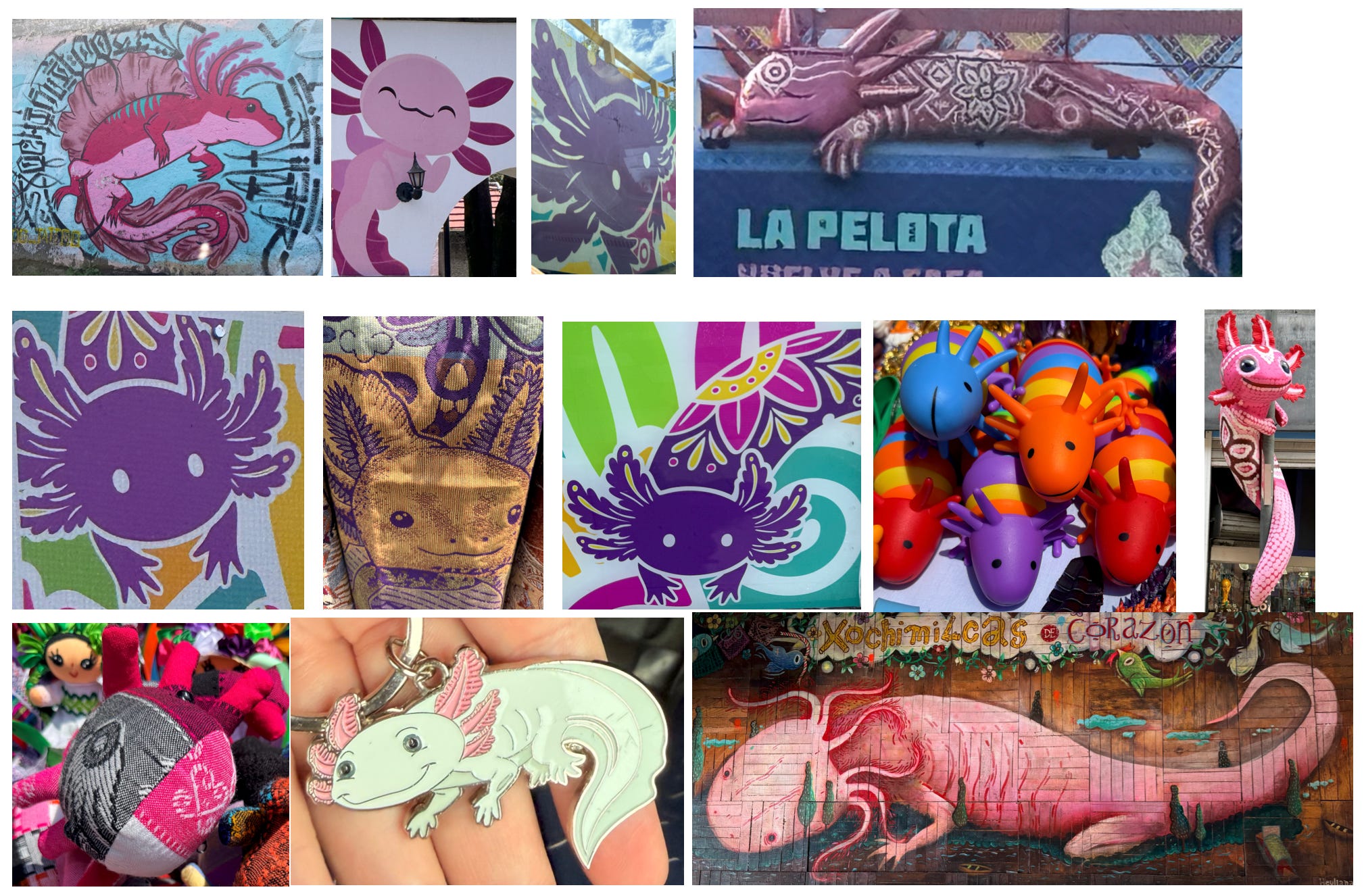
In search of the Axolotl, Dan and I found our companions in front of the San Bernadino de Sienna Franciscan Cathedral: Dr. Joel, Jenny, Oscar and six-year-old Penelope were chatting with Viri, our Viridiana Xochimilcan Tours guide. We came to this southern Mexico City to see the waning population of axolotls, but so had everyone else. Mexico City adopted the axolotl, one of the city’s best known cultural and environmental symbols, as the city’s emblem for the 2026 World’s cup. The salamander that we and most of the world would never see in the wild became the mascot of Mexico’s biggest sporting event. An amphibian that is disappearing from its only home on Earth appears everywhere on banners, trinkets, and murals, as an adorable cartoon.
“What brings you to Mexico City?” Viri asked.
“We had stadium seats for the Mexico/England World Cup,” Dr. Joel said.
“We arrived in Mexico just in time to have dinner with our friends’ and their neighbors, watch the first half of that match on a large screen in Alameda Central Park,” Dan said. “Their neighbors invited us to their home for dessert during the second half,”.
It was meaningful to watch World Cup matches on a large screen in the oldest park in all the Americas. In one soccer match alone 35.1 million Mexicans watched on T.V. and streaming. Calls were discussed, but the wonderful excitement of an entire nation sharing a love of soccer made watching here deeply meaningful. How Mexicans’ accepted their loss as “a good soccer game” is equally memorable. I felt the Mexican spirit again on the side of this lake that absorbed five centuries of loss and still generates new life.
The Aztecs, speaking Nahuatl, called these salamanders axolotl, or water monsters. Fifteen species live only in Mexico’s fresh water lake. Pink gilled, eternally smiling, the amphibian never leaves its larval aquatic form and never stops regenerating: heart, lungs, limbs, and tissue regrows. Scientists are still looking for their secret to rebuild human cells.
The story of the water the axolotls live in begins in the year 2,000 BC. Viri told us about pre-colonial Mexico City built amidst five lakes. Cortez drained most of them in the 1500s. Now there are two. One has brackish water that is replenished by rainfall where salt was deposited centuries ago. The spring fed fresh water Lake Xochimilco (Nahuatl), has 180 kms of canals between man-made islands, Chinampas (Nahuatl), or floating gardens, that are 1,100-years-old. The simple process takes six months to make an island that can last for generations. Here the rich silt on the bottom of the lake is dredged and dried to float for expanding agricultural land. Trunks, cut vines, and other compost are piled like lasagna layers on the floating island. Ahuejotes, or water willows, whose roots lace through mud around the edges, hold the islands, canal banks, and a centuries-old landscape together. The islands still provide flowers for all of Mexico City. These ancient families continue the process of floating agricultural land that filters clean water and supports wetlands animals in the midst of a metropolis.
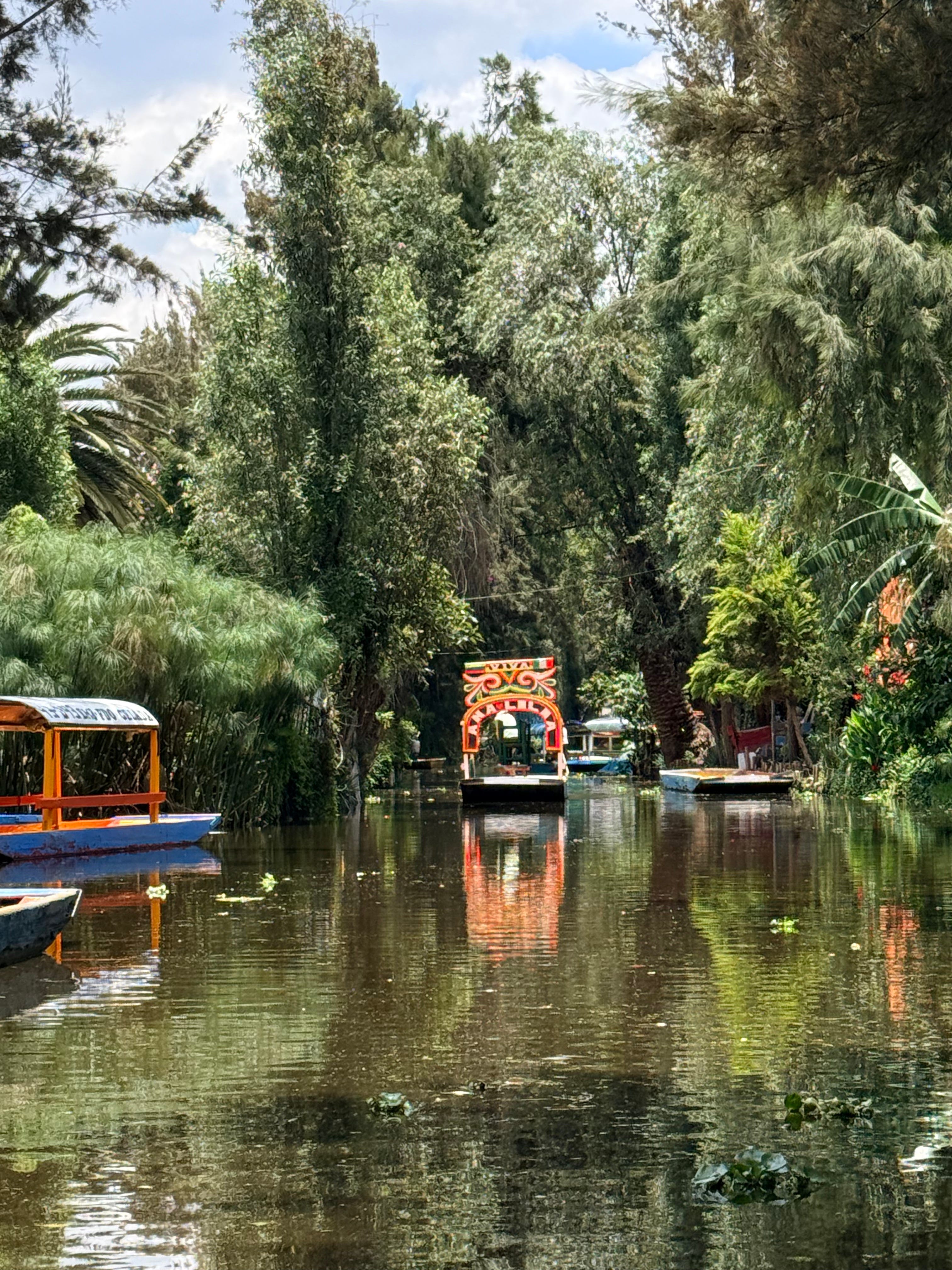
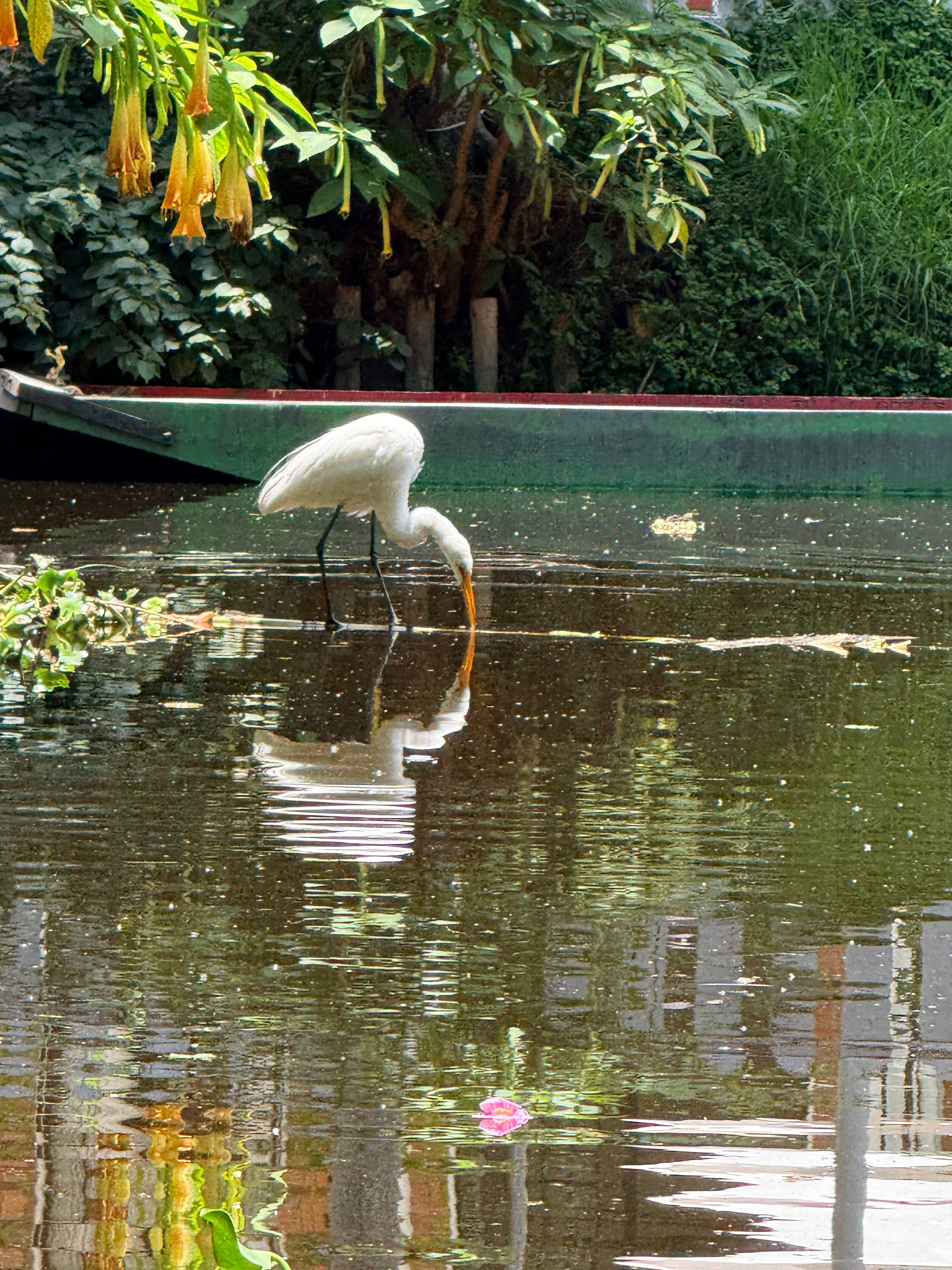
We were invited onto a trajineros, or a flat wooden boat that is poled through shallow canals by a romero, or captain. No motors to pollute the water or cause disruptive waves. Our boat is honored with the name Gloria, splendidly painted on its canopy that shades us on a bright, cool day. Chalupas are other boats on the canals. One pulled up to ours to serve micheladas and quesadillas cooked to order. Penelope, who is an avid birdwatcher, ordered a cheese quesadilla–no salsa. We shared my mini-binoculars to view coots and their chicks, Mexican ducks, hummingbirds, kingfishers, and the Great Egret that gracefully mirrored the calm water while wading in nunúfares lilies.
We step off the front of our tajinero into Xochimilco’s UNESCO World Heritage Site (1987). This protected area breeds the nearly-extinct indigenous Axolotle salamander. Wooden structures and tended gardens built for community gatherings surround us. At the end of a long garden is the sought-after axolotl aquariums. Along the garden wall are images of several of the fifteen Axolotle species. They are cuter than Nemo and going extinct! In the 1960s and 1970s carp and tilapia were introduced to the lake for sports fishing. Each December through March, the Axolotl females lay 1500 eggs. It’s not enough. Carp eat the eggs and hatchlings before they grow to inhabit land and water.
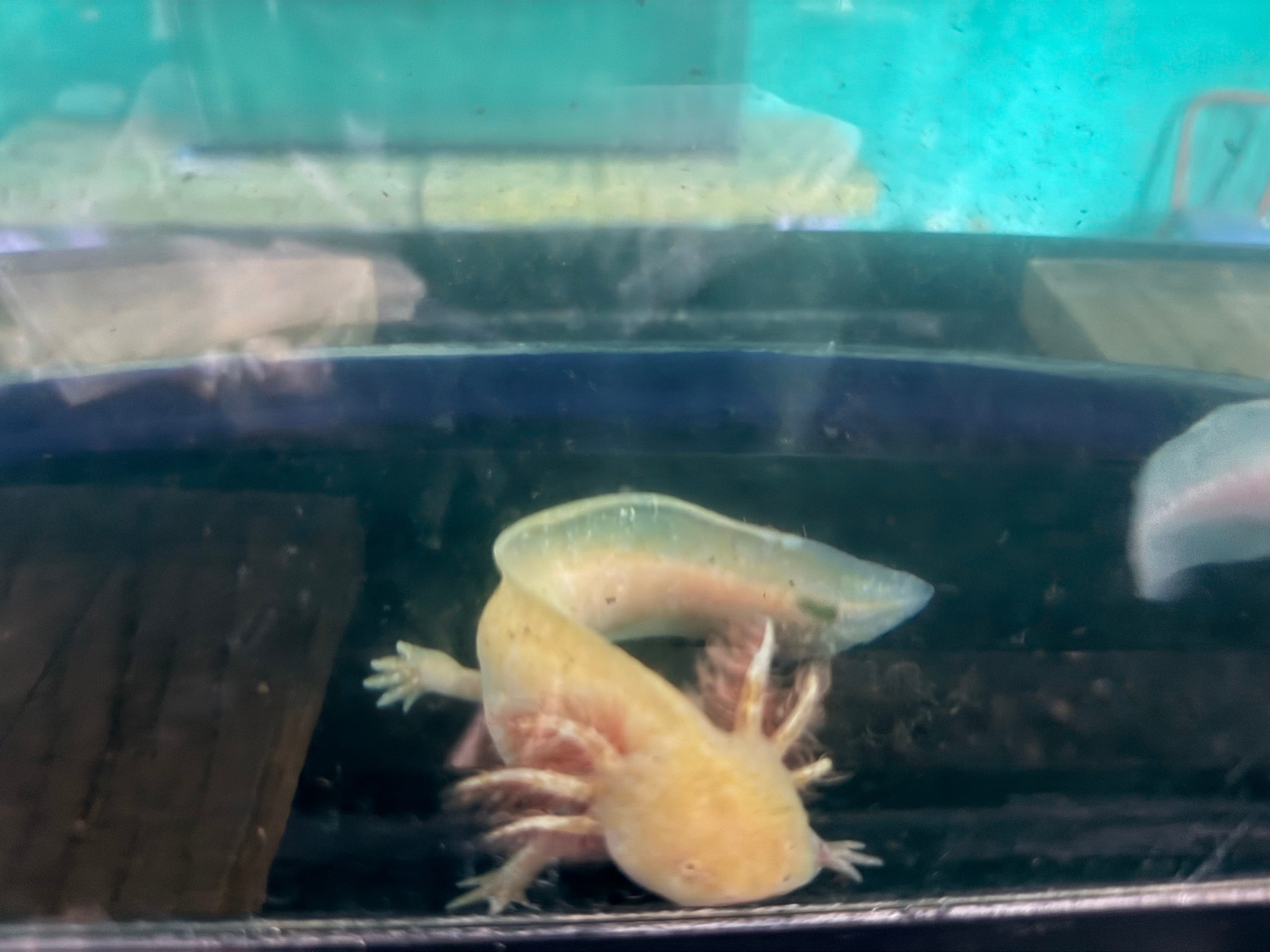
Rows of tanks filtering water are a sanctuary for axototls of all ages. Dark ones that would be invisible in the silt bottom and nearly clear white and pinks. They are nearsighted with blurry vision that can detect light, movement, and shapes. They rely on smell for protection in their murky habitat. Four little feet crawl along the bottom before a axolotl swims and twists in the water. Their ever-present smile makes them a loveable salamander.
Over the centuries these ancient salamanders have survived drained lakes, a world class city built around them, the Teotihuacan civilization since 2,000 BC, the Spanish colonialization, and now modern industrial tourists watching soccer games on large screens. This UNESCO sanctuary for breeding axolotls is their best bet for Penelope to bring her children to visit them.
Margot, Thanks for this lovely tale about your visit to Mexico and the care of the little salamanders. I hope their protection remains successful.