

The Blue Frontier
A Journey Through the World's Marine Protected Areas

The one ocean has no fences. No posted signs, no border checkpoints, no locked gates at dawn. And yet, scattered across the global blue, there are places where an invisible boundary marks a different kind of world — quieter, wilder, more alive. These are Marine Protected Areas (MPAs), and taken together they represent humanity’s most ambitious attempt to give the sea back to itself.
MPAs are coastlines, oceans, large lakes and seas where human activities have managed to protect marine ecosystems, sea life, fisheries, and indigenous peoples’ resources. MPA’s help fish populations to recover, protect biodiversity, preserve endangered species, support tourism, and improve ocean resilience. MPAs might limit fishing and boating, not allow drilling or mining, or ban pollution to prevent habitat destruction. Let’s traverse the globe to MPAs to sense the vitality of a few that sustain what the ocean once was and can be again.
Oceans Research
Stand waist-deep in the shallows of Papahānaumokuākea, the vast marine monument curling northwest of the Hawaiian archipelago, and you understand immediately why protection matters. Stretching across roughly 1.5 million square kilometers of the central Pacific, it is one of the largest MPAs on Earth, sheltering over 7,000 marine species, a quarter of which exist nowhere else. Ancient coral atolls rise from impossibly blue water. Hawaiian monk seals haul out on beaches where no human has walked in years. Spinner dolphins loop and arc. For Native Hawaiians, these waters are not wilderness in the Western sense — they are ancestral homeland, sacred and inseparable from identity. The monument holds both meanings at once.
Fly south to the Galápagos Marine Reserve, 133,000 square kilometers wrapped around the islands that rewrote our understanding of life itself. Darwin observed finches here; today marine iguanas plunge through the surf to graze on algae, hammerhead sharks cruise in spiraling schools at Wolf and Darwin Islands, and Galápagos penguins — the only penguins in the Northern Hemisphere — stand blinking in equatorial sun. The reserve is a UNESCO World Heritage site, and it earns that designation not as a museum but as a living experiment: what happens when the ocean is left largely alone?
The answer, repeatedly confirmed by science, is abundance. Fish populations rebound. Predators return. Coral recovers. Kelp forests regrow. Inside a well-enforced MPA, biomass can be ten times greater than in adjacent fished waters. The ocean, given half a chance, is extraordinarily resilient.
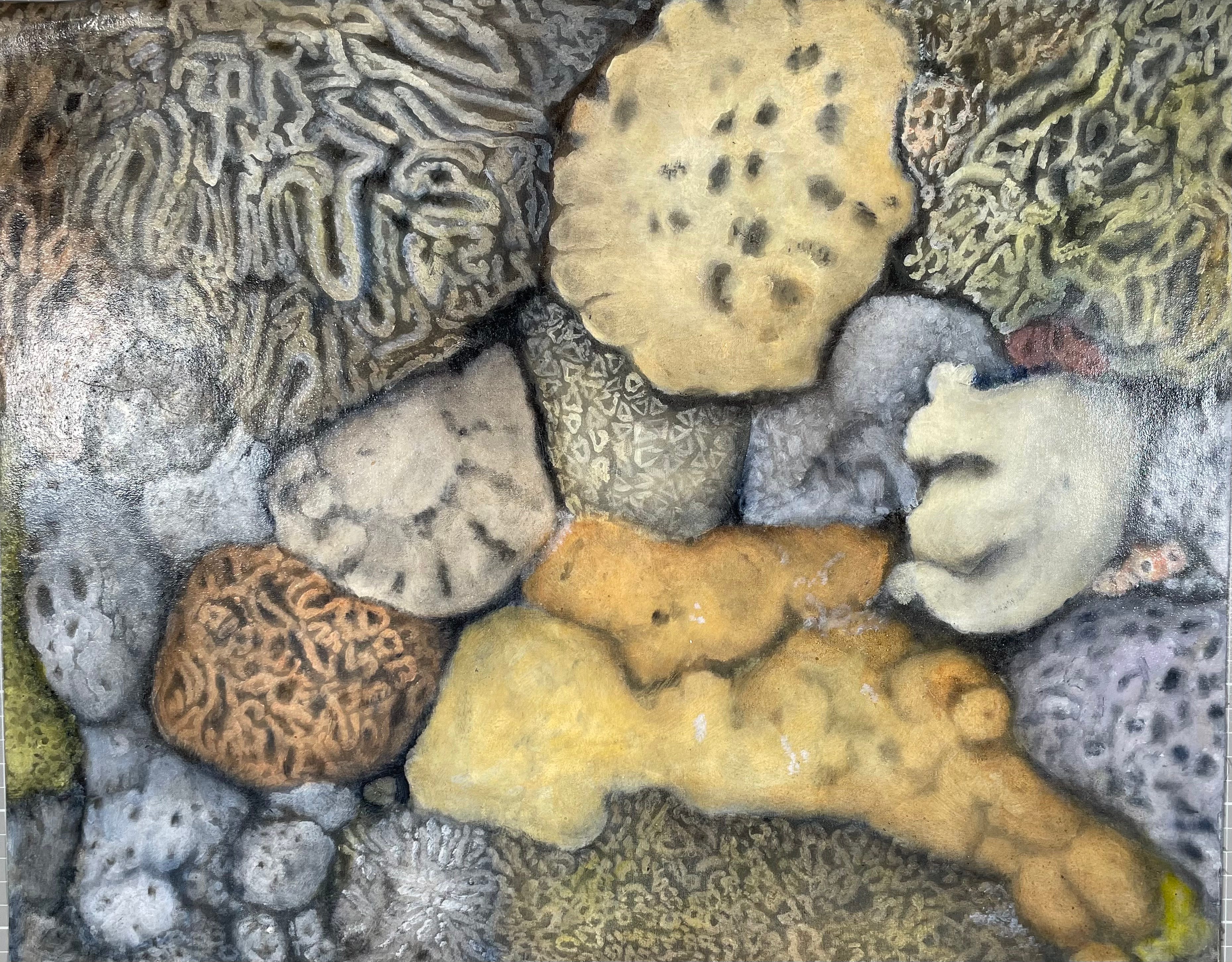
Cross to the Philippines and the Sulu Sea, where Tubbataha Reefs Natural Park rises from deep water in two remote atolls. This UNESCO site harbors over 600 fish species, 360 coral species, and critical nesting grounds for sea turtles and seabirds. Dive beneath its surface and you enter a cathedral of coral architecture — brain corals the size of small cars, gorgonian fans spreading wider than a human wingspan, Napoleon wrasse drifting through columns of light. Getting there requires a liveaboard journey of many hours from Puerto Princesa, which is part of the point. Distance is itself a form of protection.
In the South Pacific, nations are redefining what ocean stewardship can look like. New Caledonia’s Natural Park of the Coral Sea, celebrating its tenth anniversary in 2024, expanded by over 100,000 square kilometers in that milestone year, with protections increasing fivefold in some zones, and ecological corridors linking the park with the waters of Australia, Fiji, Vanuatu, and the Solomon Islands. Big Ocean The Kanak Indigenous vision of the ocean — as living ancestor, cultural inheritance, and ecological commons — shapes the park’s governance. It is a model that a growing number of MPAs are following: conservation not as exclusion, but as relationship.
The tiny Pacific nation of Niue took that logic to its ultimate conclusion. Combined with the Beveridge Reef Special Management Area, Niue now protects 100% of its Exclusive Economic Zone — and divided its surrounding ocean into 127,000 sponsorable zones, allowing individuals worldwide to contribute directly to stewardship for around $150 each. Big Ocean It is citizen conservation made literal: you can adopt a piece of the Pacific.
In 2024, Canada designated the Tang.ɢwan — ḥačxwiqak — Tsig̱is MPA off Vancouver Island’s north coast, covering roughly 150,000 square kilometers encompassing nearly 50 underwater mountains, cold-water coral, sponge forests, and migration routes for whales, seabirds, and sharks — created in collaboration with First Nations. Mongabay That same autumn, California announced the Chumash Heritage National Marine Sanctuary, also co-managed with local Indigenous groups. Mongabay A pattern is emerging: the most credible, durable MPAs in the world tend to be those built with, not merely for, the communities that have always known these waters.
Meanwhile, the Azores MPA Network — unveiled in October 2024 — became the largest MPA network in the North Atlantic, covering 287,000 square kilometers, fully 30% of the sea surrounding the archipelago. Big Ocean In the South Atlantic, the remote islands of Tristan da Cunha received a Blue Park Award in 2024 for what scientists describe as one of the most pristine marine environments remaining on Earth.
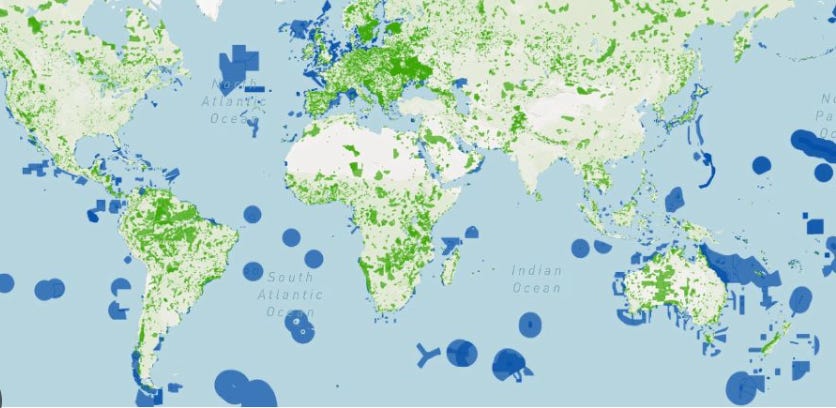
And yet the numbers are sobering. Global MPA coverage sits at just over 8% of the ocean, far behind the roughly 15% of land already under protection. Mongabay The international goal — agreed at the 2022 UN Biodiversity Summit — is to protect 30% of the ocean by 2030. Only 1.45% of ocean waters beyond national jurisdiction have any protection at all, despite those “high seas” making up 61% of the global ocean. Protected Planet The High Seas Treaty,signed by 145 countries in 2026, begins to change that — and 88 parties have ratified, or commits to follow the treaty, or formally joined it. The treaty aids international cooperation including data sharing, capacity building, science collaboration and technology sharing in underserved nations. The treaty is one of the most significant ocean conservation agreements in decades.
What does a protected ocean actually feel like? Divers who have spent time inside the world’s most effective MPAs describe something close to disorientation: the water is too full. Too many fish, stacked in columns. Sharks where you’d stopped expecting them. Coral that is not bleached. It is, in the truest sense, what normal was — and what, with patience and political will, it could be again. The global ocean, ancient and interconnected, is asking to be given back to itself. The question is whether we are listening
.
Looks amazing! Thanks Margot!